Key aspects
On this page
Agroforestry: Trees as pillars of agriculture
Learn more
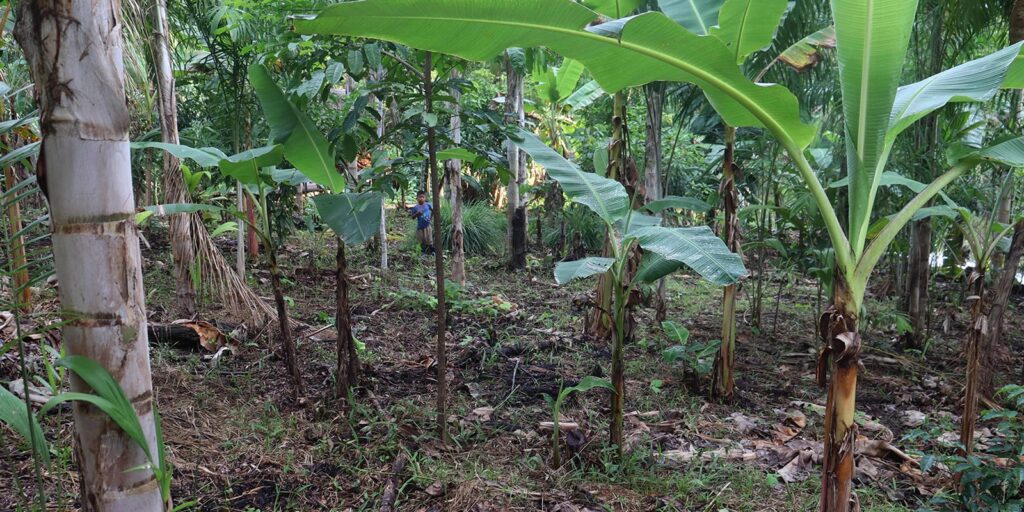
This broadens the view on parameters that are becoming more important in the face of climate change and resource scarcity, such as the plant nutrient phosphorus, and on those which increase the resilience of our land use systems. Smallholder farming, which is of greatest importance for our food production worldwide, is less mechanised and can adapt more flexibly to greater diversity in cultivation methods.
In contrast, monocultures result from a short-sighted economic mindset that places one-sided emphasis on certain aspects (e.g. mechanisation of field work and homogeneous crops). This ignores important factors such as lower ecological resilience and the necessary, increasingly expensive costs of fertilisers and pesticides.
Organic material: food for the soil
Learn more
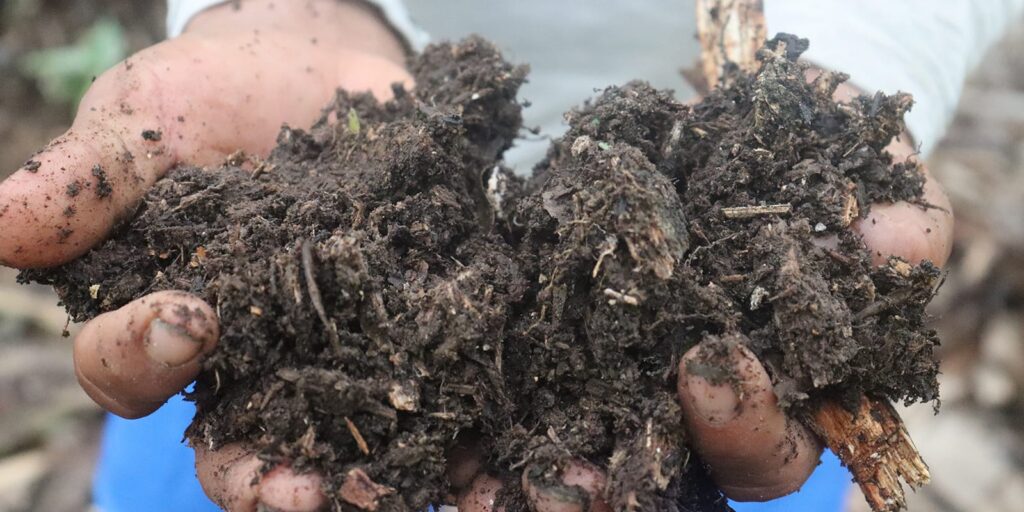
A vibrant soil life promotes soil root penetration, allowing rainwater to infiltrate better and moisture to be retained longer. It improves nutrient cycles in the soil and its buffering capacity. There are analogies with feeding ruminants, such as cows. The grass in their rumen must first be broken down by a variety of microorganisms; this symbiosis then results in milk and meat or body substance.
Burning plant material or clearing it away to create clean areas impoverishes the soil. We maintain and promote its fertility by designing our processes and cultivation systems so that part of the growing organic material remains as food for the soil and its living organisms.
Plants for the production of organic material
Learn more
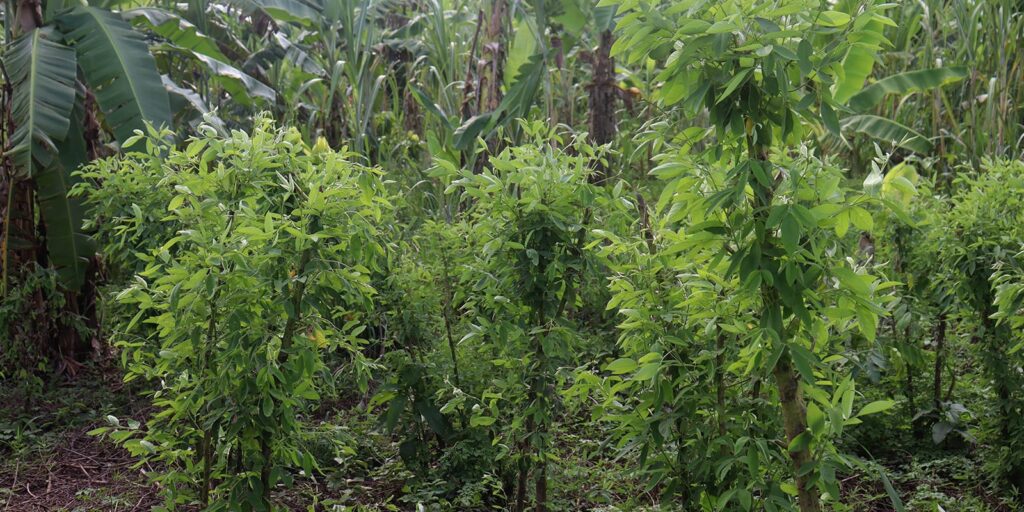
Plants whose primary purpose is to contribute to the productivity of the cultivation system are specifically included. They are intended to keep the soil shaded and use the light to build up organic matter. When these species are regularly cut back or complete their vegetation cycle, the material composts and maintains soil fertility at a high level.
The best results are achieved when the plants grow on the site itself, as the roots make up a large part of the organic matter and release root exudates that promote microbial soil life. With this approach, the organic material only needs to be spread over the area and does not need to be transported. Such plant species are “servants of the system” and valuable tools in the hands of farmers.
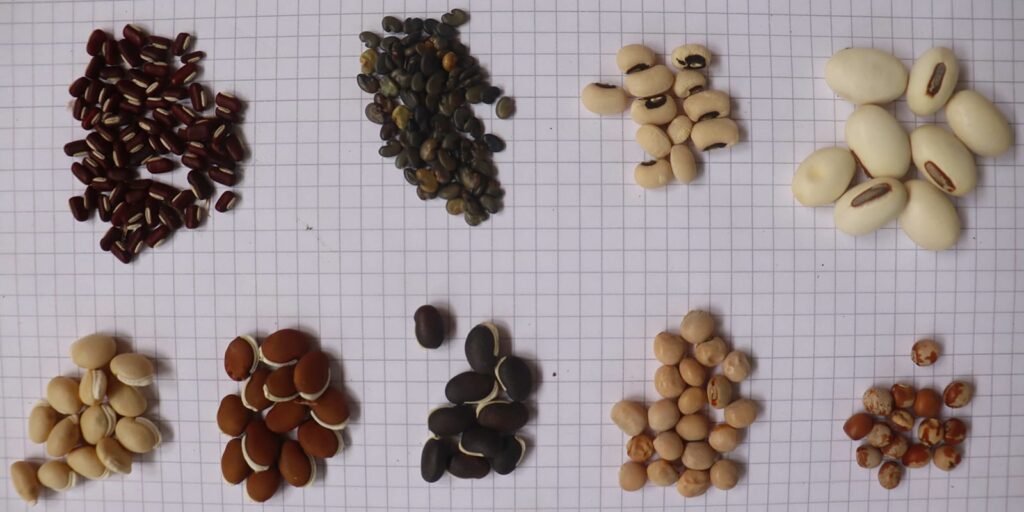
That is why we regularly work with project teams in a region to observe which plant species in the area meet these criteria. Their seeds are then harvested, and the different species are systematically tested on small observation plots in comparison with those that have proven themselves in other locations.
Seeds: Essential for an effective agroforestry system
Learn more
Local processing: adding value in the region
Learn more
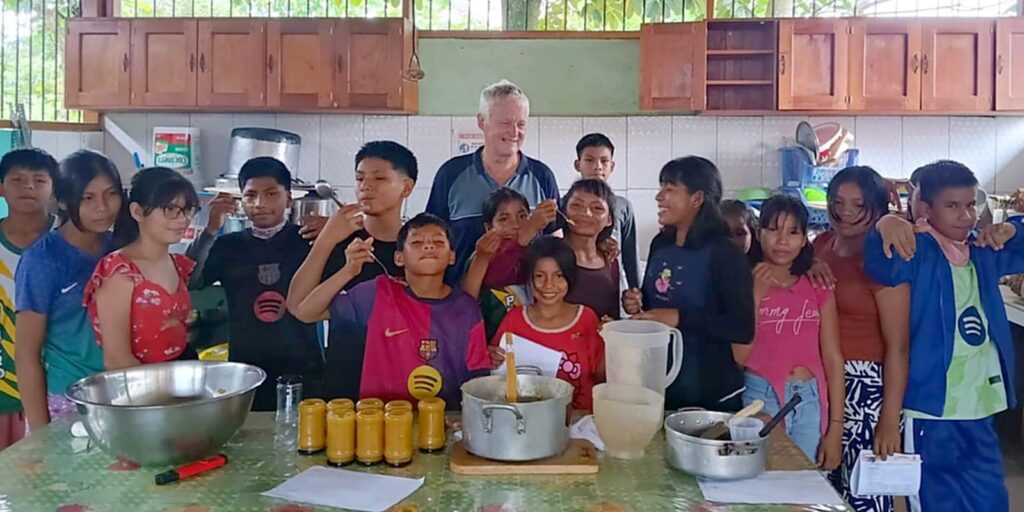
Fruit can be preserved by processing it into purees, which are then bottled and stored in airtight jars. When pasteurised at over 80 °C and at an acid value (pH) below 4, the purees can be kept for many months.
An alternative method of preservation is to dry the fruit. However, this often proves difficult to implement in regions with high humidity. It also carries the risk of toxins developing in the end-product due to mould. These cannot be detected by simple means, unlike possible fermentation faults in fruit purees in jars.
Local processing offers the great advantage that the optimal ripeness of each fruit variety can be considered. In addition, the fruit skins and other leftovers remain in the region and serve as food for animals and microorganisms in the soil.
Motorised machines can greatly increase productivity during harvest preparation and the first stages of processing (e.g., threshing machines, mills, and presses), thereby significantly improving local value creation. Innovative processes are particularly attractive to younger people in their search for life prospects and can contribute to strengthening a region.